
01
Connect Your Data
Bring data from SAP, ERP systems, secure APIs, Excel/CSV files, mobile applications, dealers, vendors and recyclers.

Initializing Digital Excellence
Enterprise EPR Compliance Platform
Manage EPR compliance across Plastic Packaging, E-Waste, Battery, Waste Tyre, Used Oil and End-of-Life Vehicles (ELV) from one unified platform.
EcoTrace One connects your enterprise data, compliance calculations, targets, certificates, partners and regulatory workflows — giving your teams a single source of truth and leadership a real-time view of compliance.
Built for enterprise-scale EPR compliance, governance and audit readiness.
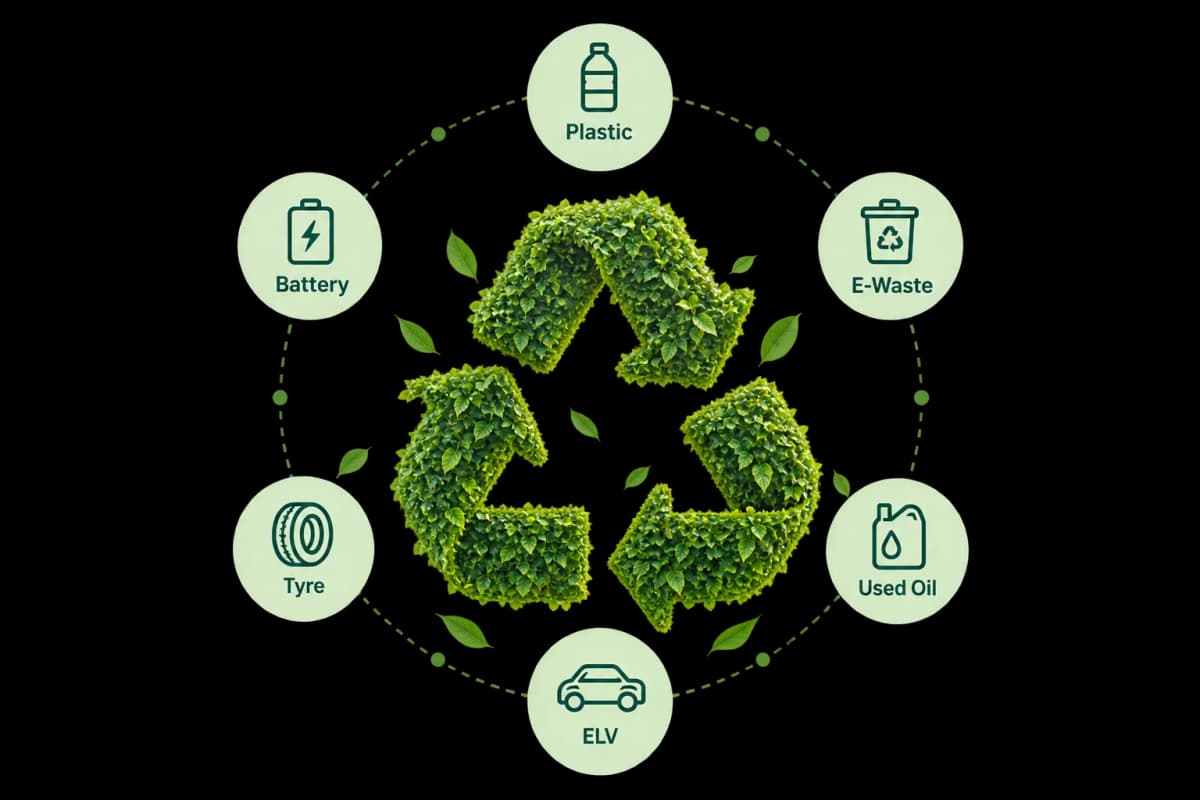
*Typical outcomes vary by organisation size, applicable waste streams and implementation scope.
Manage multiple EPR compliance workflows from one unified platform.
Packaging materials used to protect and ship products.
Tyres that reach the end of their useful life.
Lubricants and used oil generated through business operations.
Automotive, industrial and EV batteries reaching end of life.
Electronic equipment and devices reaching end of life.

Vehicles retired from use and sent for dismantling or recycling.

EcoTrace One brings your business data, EPR calculations, compliance targets, certificates and reporting into one connected workflow — giving your teams a clear view of what is required, what has been achieved and what remains.
Bring data from SAP, ERP systems, secure APIs, Excel/CSV files, mobile applications, dealers, vendors and recyclers.
Map products, materials and transactions to the relevant waste stream and applicable EPR category.
Apply configured EPR rules and calculation logic to determine applicable obligations and targets.
Monitor obligations, targets and progress across entities, business units, plants, states and waste streams.
Store and manage certificates, declarations and supporting compliance documents.
Track compliance status, pending obligations, deadlines, risk areas and achievements from one dashboard.
Generate compliance reports and manage the information required for regulatory returns from one central platform.
One source of truth. One compliance workflow.
From incoming business data to compliance evidence and reporting, EcoTrace One connects every step in the EPR lifecycle.
EcoTrace brings all Extended Producer Responsibility (EPR) duties into a single, easy-to-learn system.


Give leadership a real-time view of compliance across waste streams, business units, locations and obligations — without chasing spreadsheets or teams for updates.

See your overall compliance position and track progress across applicable EPR obligations.

Track upcoming compliance deadlines and prioritize actions before they become risks.


View compliance certificates and supporting evidence from one central location.

See pending targets and obligations that require action before the compliance period closes.
Identify entities, locations, waste streams or obligations that need immediate attention.
From compliance data to executive decisions.
EcoTrace One turns complex EPR data into a clear compliance position, helping leadership understand where the organisation stands, what needs attention and what evidence is available.
Configure your organisation once and manage EPR compliance across business units, locations, states, dealers, vendors and recyclers from a single platform.

Define legal entities, business units, divisions and corporate structures.

Map plants, facilities, warehouses and operating locations to the relevant organisational structure.

Connect dealers, vendors, recyclers, processors and other EPR stakeholders.
Assign applicable waste streams, responsibilities and compliance workflows to the right entities and locations.
One organisation. Multiple entities. One compliance view.
EcoTrace One lets enterprises manage complex organisational structures while maintaining a consolidated view of EPR compliance.

The full group view

Divisions and operating units

Facilities and manufacturing locations

State-wise targets and tracking

Sales and collection touchpoints

Authorised waste partners

Recycling and certificate issuers
EcoTrace One adapts to different business structures, waste streams and compliance workflows while giving leadership a single view of EPR performance.
Whether you're managing one business unit or a multi-location enterprise, EcoTrace One provides a common compliance framework while allowing each organisation to configure its applicable waste streams and workflows.
Applicable EPR workflows can be configured based on your organisation and regulatory requirements.
Industries
Manage EPR obligations across vehicles, tyres, batteries, used oil, plastics and end-of-life vehicles across complex business and supplier networks.
Key workflows
Waste Tyre · Battery · Used Oil · Plastic Packaging · ELV
Common Enterprise Use Cases
Manage compliance across legal entities, business units and locations.
Collect and track data from multiple plants and facilities.
Connect SAP/ERP data with EPR calculations and reporting.
Bring dealers, vendors, recyclers and processors into the compliance workflow.
Give corporate teams a consolidated view across the organisation.
Multi-Entity · Multi-Location · ERP Integration · Partner Network · Centralised Reporting
Corporate & Platform Administration
Manages platform access, compliance policies, and critical approvals.
Handles daily EPR operations, data, declarations, and compliance.
EcoTrace One brings targets, liability, achievement, pending obligations and compliance performance across waste streams and locations into a single control tower.
From Compliance Data to Clear Decisions
Monitor EPR performance across waste streams, states and reporting periods from one central dashboard.
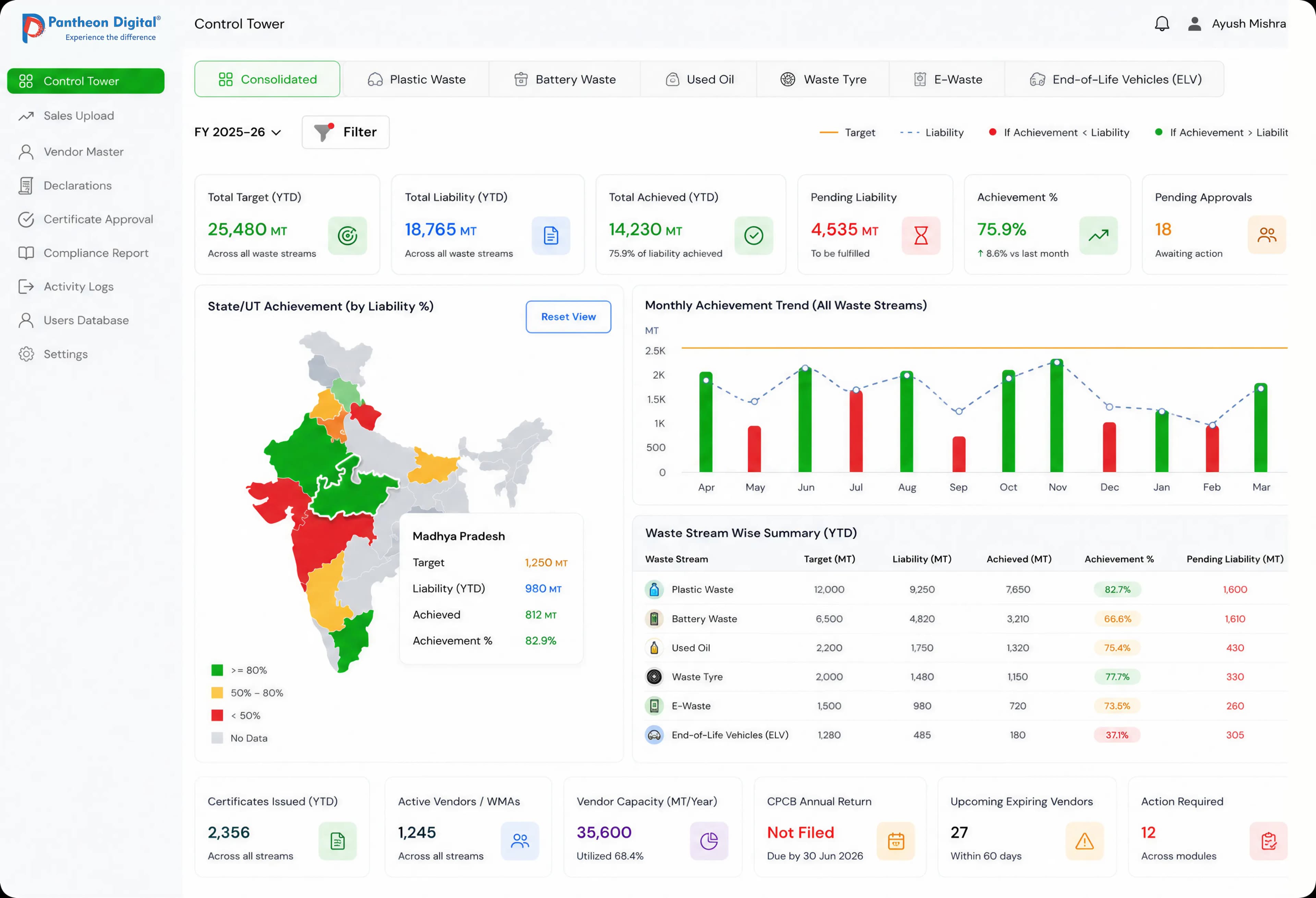
Illustrative dashboard view — sample data shown for demonstration purposes.
See compliance performance across all applicable waste streams in one place.
Compare targets, liability and achieved quantities to identify pending obligations.
Understand compliance performance across states and locations.
Drill into Plastic Packaging, Battery, Used Oil, Waste Tyre, E-Waste and End-of-Life Vehicles (ELV).
Track pending approvals and actions that require attention.
Turn complex EPR data into a clear compliance position.
Everything you need to know about managing EPR compliance with EcoTrace One.
EcoTrace One is an enterprise EPR compliance platform that helps organisations manage EPR data, obligations, targets, certificates, compliance workflows and reporting across applicable waste streams from one platform.
EcoTrace One is designed to manage applicable EPR workflows across Plastic Packaging, Waste Tyre, Used Oil, Batteries, E-Waste and End-of-Life Vehicles (ELV).
EcoTrace One uses configured EPR rules, business data and applicable calculation logic to determine relevant obligations and targets. The platform can then track those obligations against achievement and pending requirements.
Yes. EcoTrace One can be designed to receive enterprise data through ERP integrations, secure APIs and structured data uploads such as Excel or CSV, depending on the organisation's integration requirements.
Yes. EcoTrace One is designed to support enterprise structures including multiple entities, business units, plants, locations, states and external stakeholders from a central compliance platform.
Yes. Role-based access allows organisations to control what different users and stakeholders can view, submit, review or approve based on their responsibilities.
Yes. The platform can organise certificates, declarations and supporting compliance documents alongside the activities and obligations they support.
Yes. The EcoTrace One Control Tower provides a consolidated view of targets, liability, achievement, pending obligations, waste-stream performance and other compliance indicators.
EcoTrace One can provide visibility across states and locations, helping enterprises monitor compliance performance across their operating footprint.
Yes. The platform is designed around a unified compliance model so organisations can manage applicable waste streams without maintaining separate compliance systems for each requirement.
EcoTrace One uses configurable rules, targets, formulas, workflows and reporting structures so approved compliance requirements can be updated as applicable regulations and business requirements evolve.
Yes. EcoTrace One is designed for organisations with complex structures, multiple locations, enterprise systems, external partners and multiple EPR compliance requirements.